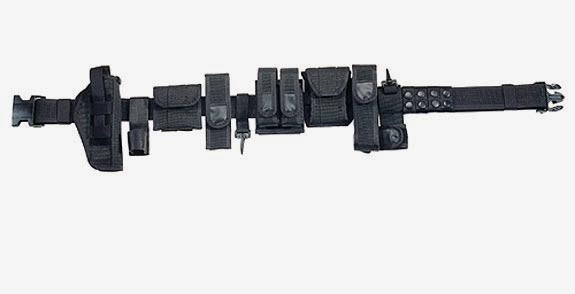
Showing posts with label Accessories. Show all posts

Hold-ups (Hosiery)

11/30/2014 Add Comment

Hold-ups


Hold-ups or stay-ups (in the United States also referred to as thigh highs) are stockings with an elasticized band at the top, designed to hold the stockings up when worn, without the use of a garter belt or garters. Thigh highs are held up by one or more bands sewn to the top that is backed with silicone on its inner surface. This ensures the thigh highs stay in position because of the elastic and the friction of the silicone against the skin. The silicone can become ineffective by contact with body lotions, oils and talcum powder, as they all reduce the friction of the silicone. Thigh highs are designed so that the elastic band exerts just the right pressure on a woman's thigh, avoiding any uncomfortable tightness or unflattering muffin-top effect. Sometimes thigh highs are preferred to pantyhose for hygiene reasons, because they reduce excessive microbial growth around the groin due to humidity and warmth.

Thigh highs may be chosen because of the classic popular "stocking top" line, and there are no suspender bumps to be seen through a skirt or dress. Like stockings and pantyhose, the thickness of thigh-highs is measured in denier.

History

With the invention of nylon, thigh high stockings took center stage in women's fashion. While high-end consumers never lost their fascination with silk thigh highs, their nylon counterparts were so ubiquitous that they ended up baptizing the entire stocking family. In popular use, stockings were referred to as 'nylons' in the 1940s.

In the 1960s, thigh highs retreated towards a more marginal place in women's fashion. It is accepted that the popularity of the mini-skirt was an important factor in this. As the skirt was growing shorter-and-shorter, revealing the top-line of the stockings silently was relegated to the realm of the osé, being superseded by pantyhose.

As a term, "hold-ups" was first used by “Pretty Polly” in 1967 for its self-supporting stockings. The company never registered the term and it has become a generic trademark for the stocking style.


Manufacturing process

Modern stockings, pantyhose, and thigh highs are made by either flat knitting or the use of circular machines. Flat knitting is the original hosiery manufacturing technique of the 1930s - 50s. After the fabric has been produced, each thigh high is individually seamed. The top of the seam has a 'finishing loop', a small hole that every seamed thigh high has as a result of the machinist turning the welt——the thigh high top–—inside out, in order to finish off. Once sewn, the thigh highs are 'boarded'. This is a process where each thigh high is stretched over a flat metal leg form and 'set' with steam. The knit tightens, creases are eliminated and the leg is correctly shaped. Because the process is time consuming, seamed thigh highs are never cheap. Also, around a third of production—especially during the production of sheer stockings—is discarded during quality control.

Thigh highs are now most often produced on circular machines that eliminate back seams by knitting tubes that are then 'set' to the shape of the leg. While the first circular machines produced sheer stockings with a reinforced heel pocket, modern machines have eliminated this, offering a better fit regardless of the wearer's shoe size.

The addition of lycra to the stocking yarn was possibly the biggest break-through in hosiery manufacturing, the result being thigh highs that combine elasticity with the ability to cling to the leg

Garter (stockings) Hosiery (3)

9/22/2014 1 Comment

Garter (stockings)

Garters (or suspenders) are articles of clothing: narrow bands of fabric fastened about the leg, used to keep up stockings, and sometimes socks. In the eighteenth to twentieth centuries, they were tied just below the knee, where the leg is most slender, to keep the stocking from slipping. The advent of elastic has made them less necessary from this functional standpoint, although they are still often worn for fashion. Garters have been widely worn by men and women, depending on fashion trends.

Garters in fashion
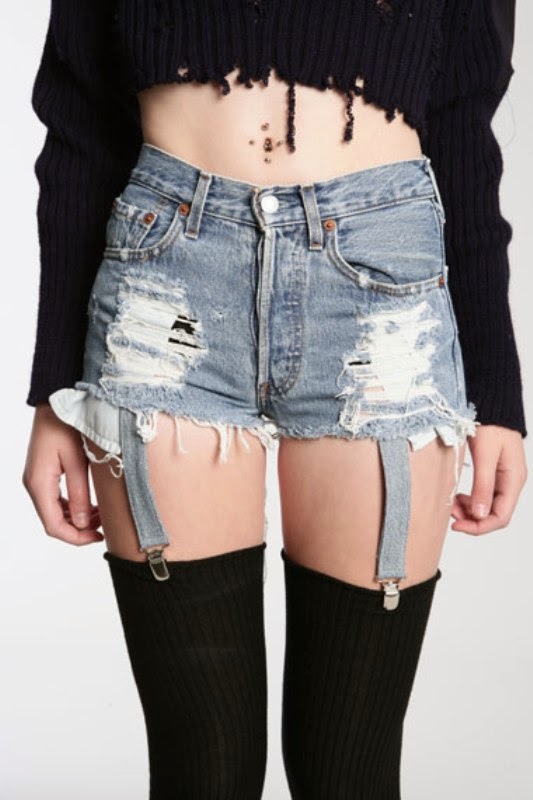
Garters were popular in the 1930s and 1940s, and were a convenient way for ladies to carry small valuables, in place of a small purse.


In Elizabethan fashions, men wore garters with their hose, and colorful garters were an object of display. In Shakespeare's Twelfth Night, "cross braced" garters are an object of some derision.

In male fashion, a type of garter for holding up socks has continued as a part of male dress up to the present, although its use may be considered somewhat stodgy.


Use in wedding traditions

There is a Western wedding tradition for a bride to wear a garter to her wedding, to be removed towards the end of the reception by the groom. This ceremony is often interpreted as symbolic of deflowering, though some sources attribute its origin to a superstition that taking an article of the bride's clothing will bring good luck. In the Middle Ages, the groom's men would rush at the new bride to take her garters as a prize.


Today, the privilege of removing the bride's garter is traditionally reserved to the groom, who will then toss the garter to the unmarried male guests. This is performed after the tossing of the bouquet, in which the bride tosses her bouquet over her shoulder to be caught by the unwed female guests. According to superstition, the lady who catches the bouquet and the man who catches the garter will be the next man and woman among those in attendance to be married (though perhaps not to each other). The ceremony often continues with the man who catches the garter obliged to place it on the leg of the lady who caught the bouquet. Traditionally, the pair are obliged to share the next dance.

Use at high school proms in the United States

Prom garters were common in the 1960s & 70s, and often conferred on the date as a souvenir. If the date received the garter, it was typically hung from his rear-view mirror.


Beginning in the mid-2000s,it has become common in the United States for young women attending a high school prom to wear a garter, usually designed to match the style and color of the young woman's dress. The prom garter may be worn throughout the evening and is sometimes given to the young woman's date as a souvenir. A young woman may also choose to keep the garter rather than give it away, as a token of her prom night. In some cases, young people may participate in a "garter and tie" dance (often hosted by the high school as part of the prom), during or after which either the young woman herself or the young woman's date removes the garter and exchanges it for the date's tie. In cases like this where the garter is given early in the evening, the young woman's date may wear it on his arm for the remainder of the evening. In areas where prom garters are common, it has become a tradition for young women to pose for a picture with other female friends before the prom, in which they pull up the skirts of their dresses to display their prom garters, which are generally worn a few inches (half-dozen centimetres) above the right knee. The giving or taking of the prom garter may or may not have the same sexual implications that are associated with wedding garters; however, the giving of the prom garter is often interpreted as publicly designating the pair as a romantic couple.

Wearing suspenders or garter belts and stockings

Suspender belts or garter belts are a usually a woman's undergarment consisting of an elasticated material strip usually at least 2" to 3" wide, but can be deeper, that is worn around the waist, to which 2 or 3 elastic suspender 'slings' are attached on each side, where the material is shaped to the contours of the body. The suspenders are typically clipped to the stockings with metal clips into which a rubber disc is inserted through the stocking material effectively 'locking' the stocking in place. These are normally attached to a length of elastic allowing for adjustment. These clips, also known as suspender slings, are best attached to stockings with a simple welt that do not have lace, or 'hold-ups' with a silicon rubber lining. Suspender belts for men do exist, usually for when a man needs to wear support hosiery for medical reasons.

It is best to wear suspender / garter belts at the waist line or just slightly below. If worn too low on the hips, there is a chance of the belt sliding down, as they are being pulled downward by the stockings. The garment should fit closely on the waist, but not too tight. Some retailers can supply garments associated with more traditional underwear, such as corselettes or girdles, in the 21st century referred to as shapewear, with suspender slings attached.

In the 21st century, pantyhose or tights are more commonly available than stockings; retail suppliers from supermarkets to department stores or lingerie and hosiery specialist shops claim the demand for stockings is 'relatively limited'. Hold-ups are an alternative way for keeping stockings up, with a band of latex rubber moulded in to the stocking top. Nevertheless, suspenders continue to be used by wearers who prefer not to wear tights for health reasons. Women who suffer from Thrush or Cystitis are often advised not to wear tights as nylon worn close to the vaginal area can exacerbate any infection present. Similarly latex rubber in hold ups may irritate some people's skin. A suspender (garter) belt is the only option in these cases. Any person with these infections should consult their doctor.

The other reason for wearing support stockings is for medical reasons associated with varicose veins or poor circulation, this may be related to heart disease. While information on these conditions can be found on line, sufferers should talk to their doctor or GP, who will probably refer the patient to the practice nurse to be measured to ensure the correct grade and size of stocking is worn.

Stockings are often considered to be a reflection of sensuality, particularly as photographs of women in fancy lingerie are often considered erotic. Again fashion has gone a full circle making these fancy suspender belts or basques readily available for special occasions, and many women enjoy 'dressing up' in attractive underwear, again an item where on line suppliers find there is a growing market.


History  19th century

Some women wore stockings with a plain elastic garter or narrow material tied tightly, not suspenders, or by simply rolling the top of the stocking, because it seemed more practical or they could not afford classic corsetry, thus creating a kind of predecessor of the modern hold ups. This was particularly common among servants and housemaid, particularly until the mid 1920s when the more modern suspender became readily available

During the world's first long distance journey by automobile in 1888 Bertha Benz, the wife of the inventor of the automobile Dr Carl Benz, used a garter to insulate a broken wire of the Benz Patent-Motorwagen Nr. 3. In remembrance of this historic road trip today's official German scenic byway Bertha Benz Memorial Route follows the tracks of Bertha Benz from Mannheim via Heidelberg to Pforzheim (Black Forest) and back. Stockings have also been used as an emergency replacement for a car's fanbelt'

History 20th century


During World War II, WAAFs (Women's Auxiliary Air Force) were issued inexpensive suspenders.

From the 1940s to '60s, suspenders became a common, popular alternative to the girdle, especially among teens and young women. Amid concerns girdles might cause abdominal flabbiness, suspender belts offered a simpler, more practical, and more comfortable choice when used simply to hold up their stockings.

Since the early 1960s, many men's magazines featured images of women in underwear, with models in suspenders and stocking, often with slips, petticoats, corsets or a bra and knickers or panties in erotic prose. These images may have an erotic element and are sometimes presented as fetish fashion and also in publications often deemed as pornography.


Compression stockings Hosiery(2)

9/20/2014 Add Comment

Compression stockings


Compression stockings are a specialized hosiery, designed to help prevent the occurrence of, and guard against further progression of venous disorders such as edema, phlebitis and thrombosis. Compression stockings are elastic garments worn around the leg, compressing the limb, exerting 
pressure against the legs, reducing the diameter of distended veins, and causing an increase in venous blood flow velocity and valve effectiveness. 


Compression therapy helps decrease venous pressure, prevents venous stasis and impairments of venous walls, and relieves heavy and aching legs.Unlike traditional dress or athletic stockings and socks, compression stockings use stronger elastics to create significant pressure on the legs, ankles and feet. Compression stockings are tightest at the ankles and gradually become less constrictive towards the knees and thighs. 

By compressing the surface veins, arteries and muscles, the circulating blood is forced through narrower circulatory channels. As a result, the arterial pressure is increased, which causes more blood to return to the heart and less blood to pool in the feet.

There are two types of compression stockings, gradient and anti-embolism.

Medical uses :- Treatment is usually prescribed by a physician to relieve 

all manifestations of chronic venous disease and prevent venous troubles.


Gradient compression stockings

These stockings are designed to remedy impaired "Musculovenous pump" performance caused by incompetent leg vein valves. They are woven in such a way that the compression level is highest around the ankle and lessens towards the top of the hose.

Doctors will typically recommend these stockings for those who are prone to blood clots, lower limb edema, and blood pooling in the legs and feet from prolonged periods of sitting or inactivity.

They are worn by those who are ambulatory in most cases, where they assist the calf muscles to perform their pumping action more efficiently to return blood to the heart. In some cases, they are worn by those at increased risk of circulatory problems, such as diabetics, whose legs are prone to 
excessive swelling. A common indicator for the prescription of such stockings is chronic peripheral venous insufficiency, caused by incompetent perforator veins. Low pressure compression stockings are available without prescription in most countries, and may be purchased at a pharmacy or medical supply store. Stockings with a higher pressure gradient, say, above 25-30mmHg, may require a prescription from a doctor.There are several crucial cautionary steps that need to be taken before 

using compression stocking:

A patient's ABI (Ankle Brachial Index) must be >1.0 per leg to wear compression stockings, otherwise the stockings may obstruct the patient's arterial flow. The ABI indicates how unobstructed a patient's leg and arm arteries are. Any competent doctor or nurse can measure and calculate a patient's ABI.
It is crucial that compression stockings are properly sized. The compression should gradually reduce from the highest compression at the smallest part of the ankle, until a 70% reduction of pressure just below the knee.

Vascular doctors & nurses may use special pads to ensure uniform higher pressure around the circumference of the ankle (to smooth out the irregular cross-sectional profile.) Self-prescription is reasonably safe assuming that the compression gradient is 15-20 mmHg, the ABI (for both legs) is 
>1.0 and that the stockings fit correctly. "Firm" gradient stockings (20-30 mmHg and 30-40 mmHg) should generally be worn only on medical advice.Although current research reports mixed results of compression socks on athletic performance, there is anecdotal evidence from athletes that they 

can benefit from such stockings.

Styles

Knee-high (AD)
Thigh-high (AG)
Pantyhose (AT)
Maternity Pantyhose
Waist Attachment/CHAPS


Hosiery

9/13/2014 Add Comment

Hosiery


Hosiery, also referred to as legwear, describes garments worn directly on the feet and legs. The term originated as the collective term for products of which a maker or seller is termed a hosier; and those products are also known generically as hose. The term is also used for all types of knitted fabric, and its thickness and weight is defined in terms of denier or opacity. Lower denier measurements of 5 to 15 describe a hose which may be sheer in appearance, whereas styles of 40 and above are dense, with little to no light able to come through on 100 denier items.

The first references to hosiery can be found in works of Hesiod, where Romans are said to have used leather or cloth in forms of strips to cover their lower body parts. Even the Egyptians are speculated to have used hosiery as socks have been found in certain tombs.

Roller derby athletes shortly after a bout in Boise, Idaho wearing fishnet and patterned pantyhose
Most hosiery garments are made by knitting methods. Modern hosiery is usually tight-fitting by virtue of stretchy fabrics and meshes. Older forms include binding to achieve a tight fit. Due to its close fit, most hosiery can be worn as an undergarment, but it is more commonly worn as a combined under/outer garment.


Types


  • Body stockings
  • Compression stockings, aka support stockings
  • Hold-ups (British English), Stay-ups (British English) or Thigh-high stockings (American English)
  • Knee highs
  • Leggings
  • Socks, tube socks (American English), knee highs and over-the-knees
  • Stockings, held by a suspender belt, also known as "sussies"
  • Tights (British English) or Pantyhose (American English)
  • Toe socks
  • Legwarmers

Shoulder belt (military) - Belt(i)

5/27/2014 Add Comment

Shoulder belt (military)


In military uniforms, a shoulder belt is a wide belt worn usually over the right shoulder and across the body. It was used to carry a cartridge box, a bayonet, a sword ("sword belt" was also the term in this case), or other military equipment.

Initially shoulder belts had buckles. In the second half of the 18th century the British army replaced buckles with shoulder belt plates. The latter ones were solid metal plates fixed with two studs to one end of the belt and used a hook to pass through one of several holes by the other end. This arrangement allowed for quick readjustment and a more neat appearance. Officers used to wear fancy gold and silver plates with elaborate engravings. Soldiers wore brass plates, usually with numerical or other design indicative of their regiments
Shoulder Belts to carry bags 

Sam Browne belt - Belt(h)

5/27/2014 Add Comment

Sam Browne belt

The Sam Browne belt is a wide belt, usually leather, which is supported by a narrower strap passing diagonally over the right shoulder. It is most often seen as part of a military or police uniform.
Sam Browne belt

Origin

Sam Browne VC was a British army officer serving in India in the 19th century. In those days officers always carried a sword into battle. It hung from a small metal clip on the waistbelt, called a 'frog'. However, the scabbard tended to slide around a lot when they charged the enemy, meaning that it had to be steadied with the left hand before being drawn


Browne came up with the idea of wearing a second belt which went over his right shoulder and held the scabbard in just the spot he wanted. This would hook into a heavy leather belt with "D-rings" for attaching accessories. It also securely carried a pistol in a flap-holster on his right hip and included a binocular case with a neck-strap. Other cavalry officers in the Indian Army began wearing a similar rig and soon it became part of the standard uniform. During the Boer War, the rig was copied by Imperial and Commonwealth troops and eventually became standard issue


Usage

Due to its former use as equipment for carrying a sword, it is traditionally only worn by those to whom a sword would historically have been issued, namely officers and Warrant Officers (snr NCOs). Throughout most of its modern history, however, its main function has been to carry a pistol, and it was found to be particularly useful with the heavy pistols typically used during the first part of the 20th century.

Safety

The Sam Browne belt has been proposed as a solution to occupational safety and health concerns about injury due to the weight of equipment on police officers' belts.However, others have expressed concern that the vertical design of the belt could enable criminals to gain physical control of law enforcement officers in an altercation.

Money belt - Belt(f)

5/26/2014 Add Comment

Money belt

One form of money belt is a belt with a pouch attached to the front which is worn under a shirt to protect valuables from thieves and/or pickpockets. Another form appears to be an ordinary belt when worn, but contains one or more hidden pockets on the inside, often closed with a zipper. Money belts are often worn by tourists as a precaution against theft.  Items typically placed in a money belt generally include such things as a passport, travel tickets, driver's license, credit cards, cash, and jewelry. A significant problem is that scammers, pickpockets, beggars, and the like, know that the presence of a money belt brings a high likelihood of the bearer being a tourist, and therefore a high value target, bringing more attention upon the wearer than desirable.


Garter (stockings) - Belts (e)

5/26/2014 Add Comment

Garter (stockings) or Suspenders

Garters (or suspenders) are narrow bands of fabric fastened about the leg, used to keep up stockings, and sometimes socks. Normally just a few inches in width, they are usually made of leather or heavy cloth, and adorned with small bells and/or ribbons. In the eighteenth to twentieth centuries, they were tied just below the knee, where the leg is most slender, to keep the stocking from slipping. The advent of elastic has made them less necessary from this functional standpoint, although they are still often worn for fashion. Garters are worn by men and women.

Garter - Women
Suspender belts or garter belts are a usually a woman's undergarment consisting of an elasticated material strip usually at least 2" to 3" wide, but can be deeper, that is worn around the waist, to which 2 or 3 elastic suspender 'slings' are attached on each side, where the material is shaped to the contours of the body. The suspenders are typically clipped to the stockings with metal clips into which a rubber disc is inserted through the stocking material effectively 'locking' the stocking in place. These are normally attached to a length of elastic allowing for adjustment. These clips, also known as suspender slings, are best attached to stockings with a simple welt that do not have lace, or 'hold-ups' with a silicon rubber lining. Suspender belts for men do exist, usually for when a man needs to wear support hosiery for medical reasons.
Suspenders - Top


It is best to wear suspender / garter belts at the waist line or just slightly below. If worn too low on the hips, there is a chance of the belt sliding down, as they are being pulled downward by the stockings. The garment should fit closely on the waist, but not too tight. Some retailers can supply garments associated with more traditional underwear, such as corselettes or girdles, now referred to as shapewear, with suspender slings attached.


Garters were popular in the 1930s and 40s, and were a convenient way for ladies to carry small valuables, in place of a small purse.
Garter with Suspenders - for Stockings 
In Elizabethan fashions, men wore garters with their hose, and colorful garters were an object of display. In Shakespeare's Twelfth Night, "cross braced" garters are an object of some derision.

In male fashion, a type of garter for holding up socks has continued as a part of male dress up to the present, although its use may be considered somewhat stodgy.
Suspenders used for Trousers 


Police duty belt - Belt (d)

5/26/2014 Add Comment

Police duty Belt

A police duty belt (sometimes referred to as a gun belt or kit belt) is a belt, typically constructed of nylon or leather used by police and security officers to carry equipment easily, in a readily-accessible manner, while leaving the hands free to interact.

Composition :- Most duty belts have a width of 2-1/4 inches and are either made of ballistic nylon or leather.Many Canadian police departments have had officers complain of having back pain due to their supposedly rigid leather belts. In response, many Canadian departments are now switching to nylon belts because they are considered by some to be more flexible.

Color :- The most common color for duty belts in service with law enforcement personnel and security officers is black; however, there is some variation. In some instances, brown leather is used in place of black, which is generally only chosen for cosmetic purposes — usually because it is more suited to the color scheme of the officers' uniforms.

Application :- Duty belts wrap around the officer's waist and fasten with a buckle at the front. This is often protected by a velcro cover to prevent release of the belt by anyone other than the officer.


Brez - Belts (c)

5/22/2014 Add Comment

Brez (clothing)

The Brez (Albanian: Brez or Brezi) is traditional belt, which is worn by Albanian men throughout Albania, in Kosovo, the Republic of Macedonia, Serbia, Montenegro, and in the Arbëresh villages in Italy.

It originates directly from the Illyrian belt

Serbians wearing Traditional Costing 


Bandolier - Belts (b)

5/22/2014 Add Comment

Bandolier

A bandolier or a bandoleer is a pocketed belt for holding ammunition. It was usually slung sash-style over the shoulder, with the ammunition pockets across the midriff and chest. In its original form, it was common issue to soldiers from the sixteenth to eighteenth centuries, and contained either pre-packed chargers, small containers of wood, metal or cloth containing the measured amount of gunpowder for a single shot with a muzzle-loading muskets or other guns, or early forms of cartridges also containing a ball. It might also carry other accessories for shooting, or grenades. Any bag worn in the same style may also be described as a bandolier bag; equally ammunition holding pocketed belts worn round the waist may also be called bandoliers.

A somewhat different form of the bandolier came into use in the 19th century when it held more modern types of cased cartridges and hand grenades. Bandoliers are now less common due to the use of magazines and belt-fed firearms, though extra ammunition belts are often carried around the body like a bandolier. They are, however, still often used with shotguns, as shotgun shells can easily be stored in traditionally-designed bandoliers. In fact, some aftermarket shotgun slings are designed in a similar fashion to traditional bandoliers, albeit with a far more limited capacity.

Another modern use of a bandolier is in the automatic rifleman of a military fireteam. Since a squad automatic weapon is often belt-fed, an automatic rifleman will carry an extra belt on his person; either in a separate compartment or slung over the chest in a bandolier fashion.

The bandolier was used to keep ammunition off a soldier's hips, as carrying too much weight on the hips can constrain movement and cause difficulty in retrieving the ammunition.

In World War I and World War II, bandoliers were issued primarily to riflemen. They were made of cloth, stitched into pockets which held clips of rifle ammunition. Today, bandoliers are commonly used to carry multiple grenade rounds. In civilian use, bandoliers are often worn by hunters and recreational shooters using shotguns.

Bandoliers made from spent or dummy rounds are often used in fashion, sometimes in heavy metal and punk subcultures.

Today bandoliers see widespread use with sport shooters and hunters alike, as well as limited use in military conflicts.

Baldric - Belts (a)

5/13/2014 Add Comment

Baldric

A baldric (also baldrick, bawdrick, bauldrick as well as some other, mostly rare or obsolete, variations) is a belt worn over one shoulder that is typically used to carry a weapon (usually a sword) or other implement such as a bugle or drum. The word may also refer to any belt in general, but this usage is poetic or archaic, and not considered standard.
Baldric 

History

Baldrics have been used since ancient times, usually as part of military dress. The design offers more support for weight than a standard waist belt, without restricting movement of the arms, and allowing easy access to the object carried. For example, the late 18th-century British Army's distinctive "Red coat" uniform pattern featured a pair of white baldrics crossed at the chest, with a soldier's bayonet sheath suspended from one and his canteen suspended from the other. Alternatively, and especially in modern times, the baldric may fill a ceremonial role rather than a practical one.
Rapier Baldric


Baldric for Band

         
Pirates Baldric 

02- Belts

5/13/2014 Add Comment

Belt (clothing)


A belt is a flexible band or strap, typically made of leather or heavy cloth, and worn around the waist. A belt supports trousers or other articles of clothing.

History

Belts have been documented for male clothing since the Bronze Age. Both genders used them off and on, depending on the current fashion. In the western world, belts were more common for men, with the exception of the early Middle Ages, late 17th century Mantua, and skirt/blouse combinations between 1900 and 1910. Art Nouveau belt buckles are now collector's items.

In the period of the latter-half of the 19th century and up until the first World War, the belt was a decorative as well as utilitarian part of the uniform, particularly among officers. In the armed forces of Prussia, Tsarist Russia, and other Eastern European nations, it was common for officers to wear extremely tight, wide belts around the waist, on the outside of the uniform, both to support a saber as well as for aesthetic reasons. These tightly cinched belts served to draw in the waist and give the wearer a trim physique, emphasizing wide shoulders and a pouting chest. Often the belt served only to emphasize waist made small by a corset worn under the uniform, a practice which was common especially during the Crimean Wars and was often noted by soldiers from the Western front. Political cartoonists of the day often portrayed the tight waist-cinching of soldiers to comedic effect, and some cartoons survive showing officers being corseted by their inferiors, a practice which surely was uncomfortable but deemed to be necessary and imposing.

In modern times, men started wearing belts in the 1920s, as trouser waists fell to a lower line. Before the 1920s, belts served mostly a decorative purpose, and were associated with the military. Moreover, prior to that trousers did not even have belt loops. In sports, trousers with belt loops were present in the 19th century already.Today it is common for men to wear a belt with their trousers.

Since the mid-1990s, the practice of sagging, which has roots tracing to prison gangs and the prohibition of belts in prison (due to their use as weapons and devices for suicide), has been practiced at times among young men and boys.

Different Varients are,

  1. Baldric
  2. Bandolier
  3. Brez 
  4. Police duty belt
  5. Garter (stockings)
  6. Gartel
  7. Money belt
  8. Sam Browne belt
  9. Shoulder belt (military)
  10. Suspenders
  11. Webbed belt
  12. Zoster (costume)
Click the Variants to read more 
etc.


Arm warmers

5/08/2014 Add Comment

Arm warmers

Arm warmers are knitted "sleeves" worn on the arms. Sometimes worn by dancers to warm up their bodies before class, they have also become somewhat of a fashion item, appearing in the fall.

Arm warmers can also describe any glove-like articles of clothing that lack finger coverings and/or were originally designed to keep wrists and lower arms warm. Today, many competition and sport bicyclists as well as distance runners/marathoners wear spandex-compression arm-warmers.
                         

History

Various sub-cultures, such as the punk, emo and goth subcultures, have also adopted arm warmers as a fashion statement. Stores such as Hot Topic sell arm warmers with chains and designs of skulls, piano keys, band logos, and other alternative inspired designs

Evening glove


Ladies' evening gloves or opera gloves are a type of formal glove that reaches beyond the elbow.

Ladies' gloves for formal and semi-formal wear come in three lengths for women: wrist, elbow, and opera or full-length (over the elbow, usually reaching to the biceps but sometimes to the full length of the arm).

The most expensive full-length gloves are custom-made of kid leather, also known as kidskin. Many other types of leather, most usually soft varieties of cowhide, are used in making full-length gloves; patent leather and suede are especially popular as alternatives to kidskin, and are often more affordable than kidskin. Latex or rubber opera gloves, most often used in latex and PVC fetishism, are also available (see also glove fetishism). Satin and stretch satin materials are extremely popular, and there are mass-produced varieties as well.

Armbinder

An armbinder is a type of restraint devices primarily used in bondage play (rather than law enforcement, medicine, or psychiatry), designed to bind the arms and/or hands to each other or to the body, usually behind the back, and employing a range of bondage equipment including cuffs, rods, straps, and gloves.

Mono Glove

A common form of armbinder consists of a sheath, roughly conical, that encloses both of the wearer's arms from fingertips to above the elbow, holding them together behind the back, combined with one of various harness (straps) arrangements to hold it in place. The sheath is commonly of latex or leather which itself typically covers the arms from the fingertips to above the elbows, and is closed and tightened with a zipper, lacing, or sometimes both; the sheath is frequently supplemented with straps around the wrists and the elbows or upper arms. The sheath alone is ineffective without a harness to keep it from slipping down the arms; the most common harness is a pair of straps that join to the outer top of the sheath, run over the shoulders and under the armpits, and join again at the inner top of the sheath. The straps are usually crossed, behind the neck or across the upper chest, to prevent the straps from slipping off the shoulders. The latter position can cause problems if the straps tend to ride up and press on the wearer's throat. Left strap is brought from under left armpit, brought over right shoulder and then buckled up behind the neck . same is done with right strap and then both right and left strap are buckled together to prevent falling of armbinder. Due to this armbinder, elbows are kept in touch with each other for a long time which can cause injury if kept for a very long time


Different Arm Wears


Arm Warmer


Arm Warmer
  

Classification of Under wear

5/08/2014 Add Comment

Classification of Under wear 

1. Bloomers (clothing)
Booty pop
2. Bodysuit
bloomers
3. Boothose
4. Booty Pop
5. Boxer briefs
6. Boxer shorts
7. Braies
8. Brassiere
9. Breast binding
10. Briefs
11. Cache-sexe
12. Camisole
13. Chastity belt
14. Chemise cagoule
15. Cilice
16. Cloth diaper
17. Codpiece
18. Compression garment
19. Cycling shorts
20. Dance belt
CACHE-SEXE
21. Diaper
22. Farthingale
23. Fatsuit
24. Footwraps
25. Fundoshi
26. Hoop skirt
27. Jockstrap
28. Kacchera
29. Kaupinam
30. Kirtle
31. Knickerbockers (clothing)
32. Langota
33. Leotard
34. Loincloth
35. Long underwear
36. Namba (clothing)
37. Pannier (clothing)
     
kacchera
38. Pantalettes
39. Pelvic protector
40. Plastic pants
True Scotsman
41. Rubber pants
42. Tanga (clothing)
43. Temple garment
44. The Underwear Expert
45. Thong (clothing)
46. Tights
47. True Scotsman
48. Tube top
49. Underpants
50. Undershirt
51. Union suit
52. Vest

Classification of Sports Clothing

5/01/2014 Add Comment

Sports Clothing - Categories 


Sportswear or active wear is clothing, including footwear, worn for sport or physical exercise. Sport-specific clothing is worn for most sports and physical exercise, for practical, comfort or safety reasons.

Typical sport-specific garments include shorts, tracksuits, T-shirts, tennis shirts and polo shirts. Specialized garments include wet suits (for swimming, diving or surfing) and salopettes (for skiing) and leotards (for gymnastics). Sports footwear include trainers. It also includes some underwear, such as the jockstrap and sports bra. Sportswear is also at times worn as casual fashion clothing.

For most sports the athletes wear a combination of different items of clothing, e.g. sport shoes, pants and shirts. In some sports, protective gear may need to be worn, such as helmets or American football body armour.

Balaclava (clothing)

1. Cycling jerseys

     1. Giro d'Italia
     2. Driekleur trikot
     3. Maglia nera
     4. Rainbow jersey

2. Hiking apparel

     1. Balaclava (clothing)
     2. Hiking apparel
     3. Rain pants
     4. Raincoat

3. Swimsuits
Swim Suites

1. Bikinis‎
     1. Aquapel
     2. Arena X-Glide
     3. Bathing dress
     4. Boardshorts (Surf Trunks)
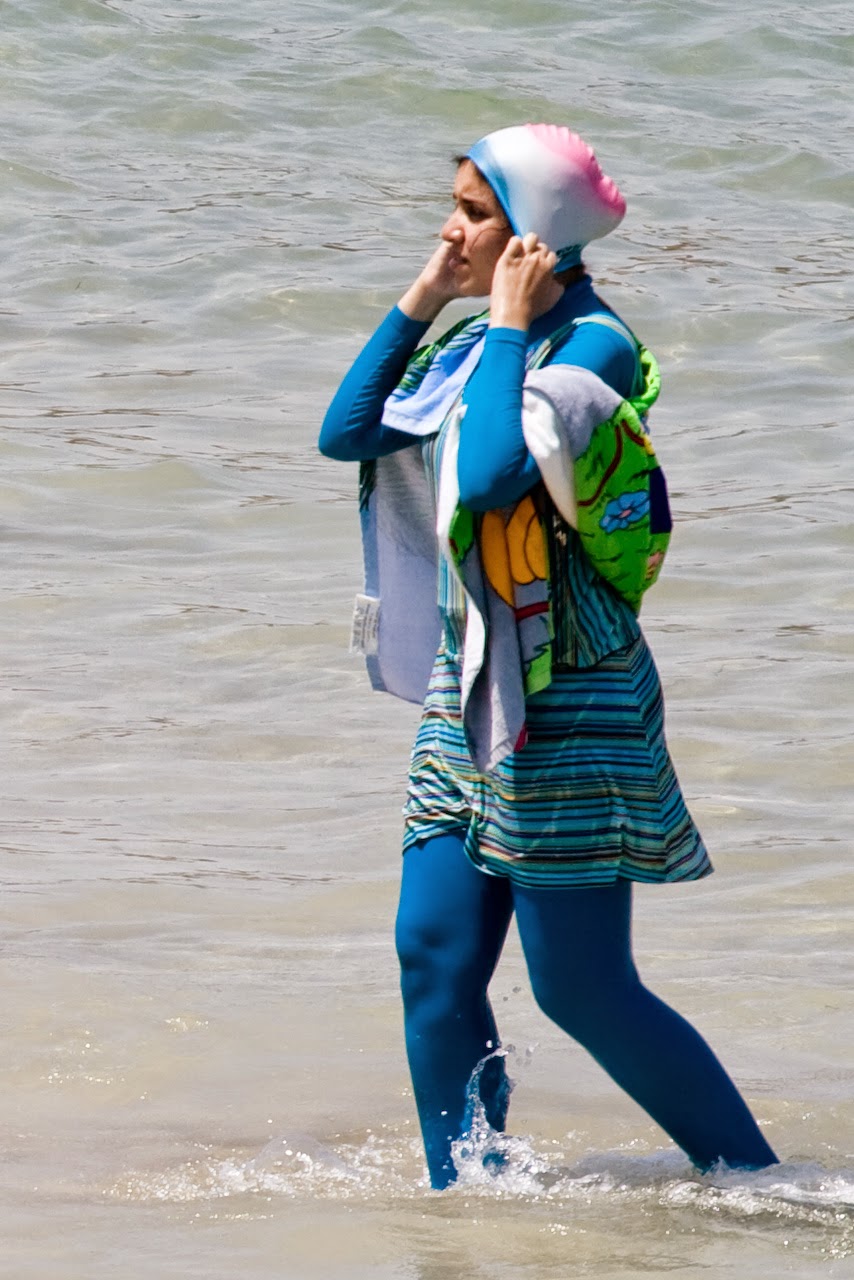
     5. Burqini
     6. Chained (swimsuit line)
     7. G-string
     8. Loincloth
     9. LZR Racer
    10. Maillot
    11. Monokini
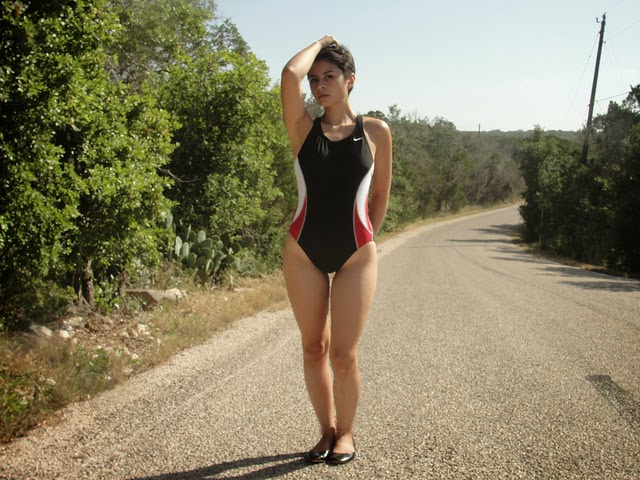
   12. One-piece swimsuit
   13. Rash guard
   14. Sling swimsuit
Burqini
   15. Sukumizu
   16. Swim briefs
   17. Tanga (clothing)
   18. Tankini
   19. Thongs
   20. Trunks (clothing)
   21. Veilkini

2. Competitive swimwear

1. Bodyskin
2. Briefs
3. Drag suit
4. Kneeskin
5. Jammer
6. Legskin
7. Racerback
8. Square cut
Bikini

Classification of Hosiery

4/30/2014 Add Comment

Hosiery  Sub Categories 

1. Bootee
Bootee
2. Boothose
3. Churidar
4. Compression garment
5. Compression stockings
6. Fully fashioned stockings
7. Garter (stockings)
8. Hold-ups
9. Hose (clothing)
10. Jorabs
11. Knee highs
12. Leg warmer
13. Leggings
14. Leotard
15. Nylon riots
compression garment
16. Pantyhose
17. Pantyhose for men
18. Pencil suit
19. Sock
20. Stocking
21. Tights
22. Toe tights
23. Tregging
24. Ultra sheer
25. Underalls

Clothing Classification Arm, Belt and Coats

4/30/2014 Add Comment
This category contains only sub-categories for types of clothing. For further details go through the pages this only include Apparel and Garment listing


  1. Arm Wear 
    1. Arm Warmer 
    2. Arm binder 
    3. Gloves etc. 


2. Belts

    1. Baldric 
    2. Bandolier 
    3. Brez 
    4. Garter (stockings) 
    5. Shoulder Belt 
    6. Zoster etc. 


3. Children Clothing
    1. Bib 
    2. Blanket sleeper 
    3. Breeching (boys) 
    4. Buster Brown suit 
    5. Cloth diaper 
    6. Coif 
    7. Diaper 
    8. Gymslip 
    9. Kkachi durumagi 
    10. Leotard 
    11. Pajamas 
    12. Playsuit 
    13. Pudding hat 
    14. Romper suit 
    15. Sailor suit 
    16. School uniform 
    17. Skeleton suit 


4. Coats

    1. A-line 
    2. Atilla 
    3. Balmacaan 
    4. Bedgown 
    5. Bekishe 
    6. Blouson 
    7. Buff coat 
    8. Burka (Caucasus) 
    9. Chesterfield coat 
    10. Coatee 
    11. Covert coat 
    12. Denison smock 
    13. Dolman 
    14. Doobon coat 
    15. Double-breasted 
    16. Duffle coat 
    17. Duster 
    18. Eisenhower jacket 
    19. Frock coat 
    20. Gaberdine 
    21. Goggle jacket 
    22. Greatcoat 
    23. Inverness coat 
    24. Jacket 
    25. Justacorps 
    26. Kepenek 
    27. Kkachi durumagi 
    28. Kobeniak 
    29. Kontusz 
    30. Kozhukh 
    31. Kozhushanka 
    32. Mackintosh ( rain Coat) 
    33. Mandilion 
    34. Mantle 
    35. Mantle (vesture) 
    36. Oilskin 
    37. Opera coat 
    38. Overcoat 
    39. Overfrock 
    40. Parka 
    41. Pea coat 
    42. Poncho 
    43. Raccoon coat 
    44. Raincoat 
    45. Redingote 
    46. Rekel 
    47. Ruana 
    48. Shearling coat 
    49. Shell jacket 
    50. Sherwani 
    51. Single-breasted 
    52. Ski suit 
    53. Spencer 
    54. Sukmana 
    55. Surtout 
    56. Tailcoat 
    57. Trench coat 
    58. Tunic (military) 
    59. Ulster coat 
    60. White coat 
    61. Zamarra